
news
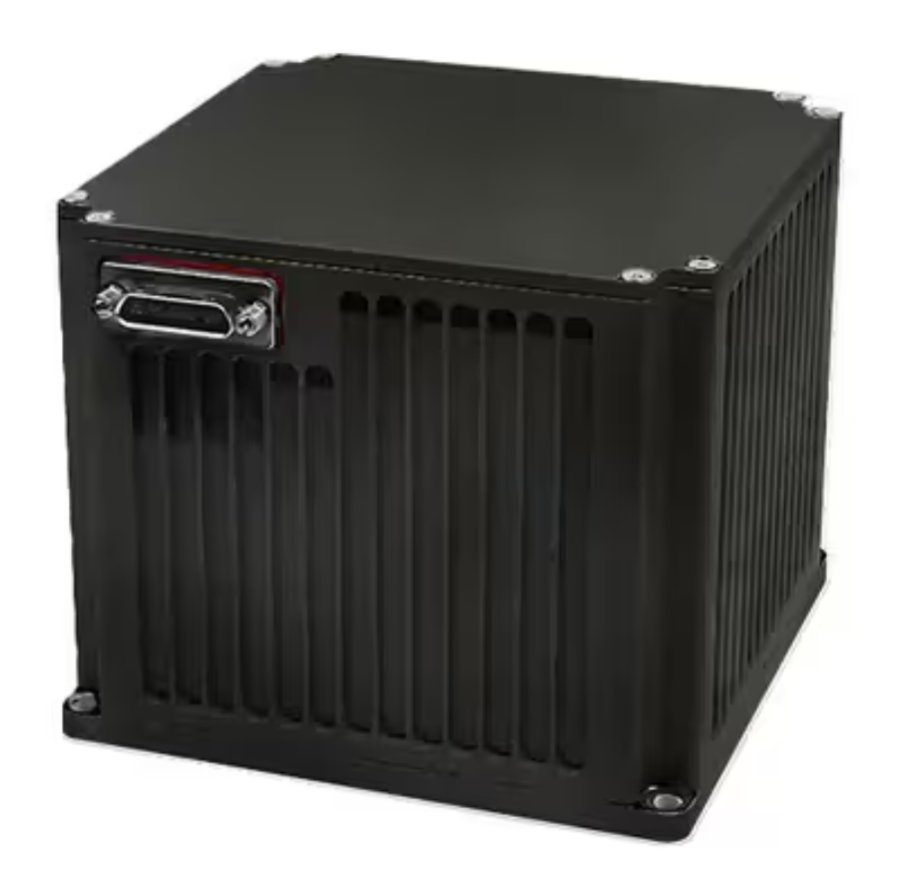
Position and Orientation Systems
Position and Orientation Systems
A position and orientation system (also known as an attitude sensor or an inertial navigation system) consists of sensors that measure rotation with a gyroscope and translation with an accelerometer. This information is used to determine the position and orientation of the sensor. A navigation system can also use a beacon or other external reference to help correct for sensor drift. These systems are often used in airborne vehicles and provide high accuracy positioning, especially when used with satellite navigation. A GNSS (Global Navigation Satellite System) is an example of a satellite-based position and orientation system. Its use is limited by line-of-sight limitations, but its position is generally more accurate than an inertial system.
Positioning is an important component of many applications. Whether it is to accurately locate equipment, track the location of an object or guide a robot through an environment, accurate position measurement is required. Orientation is an additional requirement that describes the relative positioning of the body with respect to its frame of reference. The combination of position and orientation allows an object to be precisely located in space.
The first step to specifying the position and orientation of a rigid body is to define its reference frame. In the case of a 3-D frame, this can be done by assigning three coordinates to each point in the plane: x, y and z. The orientation of the body is then defined as the ratio between the module of the vector aligned with the rotation axis and the value of the angle that corresponds to that axes (see Euler vector). A similar approach is used for 2-D orientations, defining the position of a point in a plane using a vector and a radius.
For more complex cases, it is convenient to introduce a matrix representation of the rotation. This was developed by Euler, who realized that the composition of a number of rotations about different fixed axes is equivalent to a single rotation around a different axis. This is referred to as the Euler rotation theorem.
Various ways of describing rotations have been used since. One of the most widely used is an axis-angle representation, which consists of a unit vector aligned with the rotation axis (often called the rotation vector) and a number that indicates the angle. This representation is free from continuity and rotation sequence issues but requires conversion to a different data type to be useful.
Tags:ins system
1users like this.
- Home
-
All Products

Your cart is currently empty.