
news
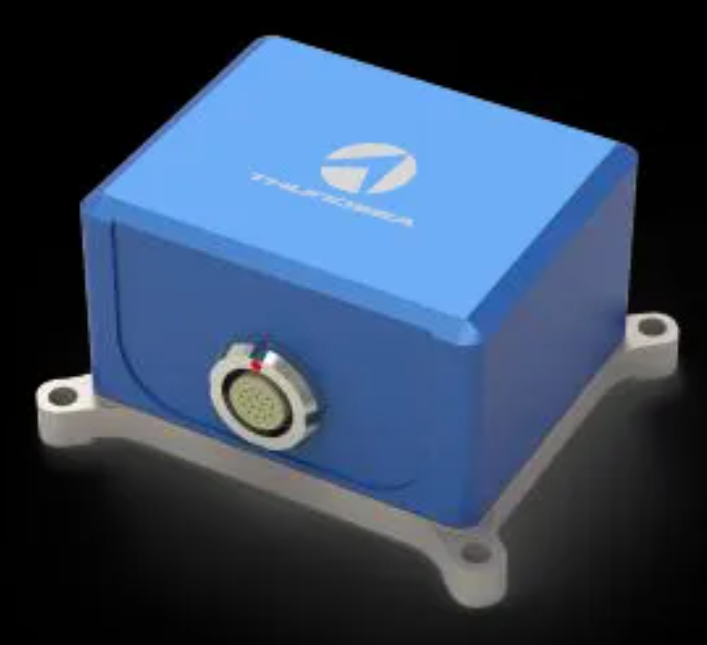
MEMS Inertial Navigation System Fault Detection and Isolation
MEMS Inertial Navigation System Fault Detection and Isolation
A mems inertial navigation system provides navigation and orientation information, which are critical for military operations, autonomous vehicles, and other precision applications.mems inertial navigation system It is a sophisticated, technologically advanced, compact-sized, and reliable device that allows a vehicle to navigate and position itself without the need for external references.
Compared to traditional inertial systems, mems inertial navigation system is much smaller, lighter, and consumes less power. This makes it an ideal choice for unmanned aerial vehicles (UAVs), automobiles, and drones. However, this does not mean that these systems are less accurate than their traditional counterparts. In fact, inertial systems based on micro-electromechanical sensors (MEMS) have become more precise and stable over time. This has been possible because of the advances in MEMS sensor technology and signal processing techniques.
As the MEMS IMUs are highly sensitive to vibrations in the environment, it is important for AV developers to develop methods that can minimize these effects and provide robust and accurate performance. Fault detection and isolation is one way to improve the accuracy of a MEMS IMU array. This can be done by implementing redundancy technology or by using a more advanced fault detection algorithm.
The first step is to analyze and model the errors that may occur in a MEMS IMU array. There are a few common error analysis methods that can be used to identify these errors, including the Allan variance method, the autocorrelation function method, and the power spectral density analysis. The Allan variance method is the most commonly used technique, as it has obvious characteristics and can be applied to any kind of MEMS inertial sensor.
Once the errors have been analyzed and modeled, the next step is to implement a fault detection and isolation algorithm. This can be done through redundant sensor configuration or by utilizing a more advanced fault detection algorithm that utilizes artificial intelligence. The former is a cost-effective solution that can increase the fault tolerance of the MEMS IMUs. The latter involves a more complex process and requires specialized software, but it can significantly increase the fault tolerance of the MEMS IMUs.
A MEMS IMU can also be integrated with GNSS to offer better accuracy and reliability. Advanced Navigation offers a complete system of MEMS-based inertial navigation solutions that combine temperature-calibrated accelerometers, gyroscopes, magnetometers, pressure sensors, and state-of-the-art RTK GNSS receivers in a small form factor and hermetic SMD package. Our MEMS-based INS uses a proprietary AI algorithm that tracks sensor error faster than conventional Kalman filtering, making it an excellent option for mission-critical applications.
MEMS IMUs are a game-changing advancement in navigation technologies, particularly for military and commercial applications that require high accuracy and stability. As a pioneer in this space, Inertial Labs is continuing to advance these technologies by focusing on innovation, precision, and robustness. To learn more about our products and how they can benefit your application, contact us today. We are proud to offer a wide range of tactical-grade MEMS IMUs and can tailor our products to your specific needs.
1users like this.
- Home
-
All Products

Your cart is currently empty.