
news
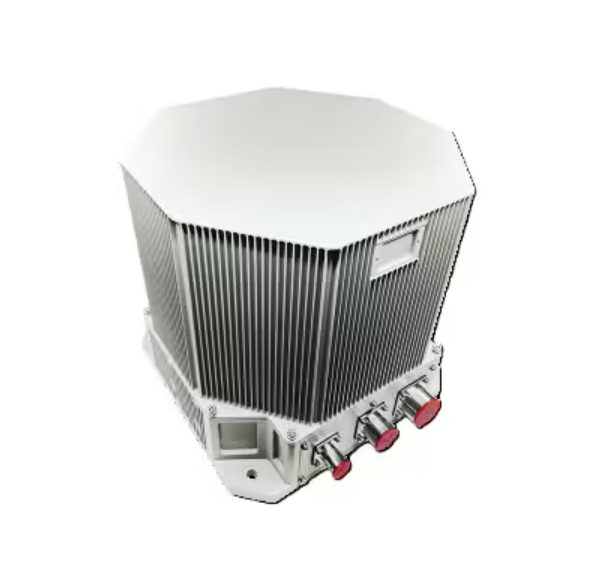
Inertial Navigation System Cost
Inertial Navigation System Cost
The cost of inertial navigation systems varies widely depending on several factors, including sensor accuracy and specific features offered.inertial navigation system cost Inertial measurement units (IMUs) combine gyroscopes and accelerometers with magnetometers to form inertial navigation sensors that offer precision positioning, velocity and orientation data. The type of IMUs used and the level of accuracy required directly impacts pricing, with consumer-grade IMUs offering less accurate performance while professional-grade IMUs deliver sub-micro to nano-radian accuracy.
Inertial navigation integrates deeply into navigation and control architectures across defense, aviation, and industrial automation platforms.inertial navigation system cost Inertial sensors improve system robustness and real-time responsiveness as navigation precision, reliability, and safety become strategic priorities. Moreover, they support autonomous mobility, precision agriculture, and unmanned aerial vehicles operating in contested or GPS denied environments.
Government investments drive market momentum as military and aerospace programs prioritize resilient navigation in contested environments.inertial navigation system cost Additionally, national security and border protection programs place value on GPS-denied navigation capabilities and reliance on indigenous navigation systems. Regulatory oversight imposes operational continuity and redundancy requirements that further drive procurement behavior.
GNSS-aided inertial navigation systems (INS) provide high-accuracy positioning with consistent performance across a wide range of environmental conditions. These systems use advanced gyroscopes with a hybrid GNSS/INS architecture to improve performance, stability, and precision in harsh environments. They also enable a range of applications such as offshore exploration, smart infrastructure, and mobile mapping that require positioning continuity.
Inertial sensors are embedded in the INS, which then performs calculations to compute a position, velocity, and attitude estimate. The accuracy of the INS is determined by its sensors, software, and calibration. The resulting estimates are then compared to a master GNSS reference, which is either on-board or a tethered GNSS receiver.
To achieve high-accuracy INS performance, the sensors must be temperature-calibrated and free of mechanical errors. This requires a significant amount of testing, which can be expensive and time-consuming. However, the advantages of high-accuracy INSs can be substantial, particularly for long duration flights.
The most accurate inertial sensors are ring laser gyroscopes, which are extremely expensive and have very low error rates in angular velocity and acceleration. These are the best choice for high-precision INSs for automotive, drone, and UAV systems. In addition, they are very easy to calibrate.
A mass-market IMU such as the Ekinox-D can cost as little as USD 3,000, but a high-precision INS for automotive and drone applications typically costs over $50,000. This is due to the high number of tests required to obtain a good set of measurements that can be used for calibration purposes.
The initial capital expenditure required to develop an inertial navigation system can be prohibitive, particularly for startups. Startups should look into equity or specialized equipment leasing/debt to finance their inertial navigation development efforts until they reach breakeven. For more details on calculating the required capital, see our article How Much Does Inertial Navigation System Development Cost?.
Any questions, pls view and broswer link: High-Quality INT-D-M12 Autonomous FOG Ships Inertial Navigation System 24V With Quartz Accelerometers Supplier -inertial-navigations.com
2users like this.
- Home
-
All Products

Your cart is currently empty.